Your first haircut after a hair transplant: a practical guide
When to book, what to tell your barber, and how to protect a healing scalp while new hair grows.

Published: 11 October 2026
Updated: 11 October 2026
Contents
- Why the first haircut needs a little planning
- When can you book the appointment?
- Scissors, clippers and razors are separate questions
- FUE and FUT donor areas
- What to tell your barber or hairdresser
- Choosing a style during uneven growth
- Can you have a skin fade?
- Washing, drying and styling at the salon
- Colouring, bleaching and chemical treatments
- Reasons to postpone the cut and contact the clinic
- Questions to settle before you book
- Questions and answers
Your first haircut after a hair transplant should be planned around healing and the advice from your surgical team. A trim of existing hair, clippers over the donor area and a close shave across the recipient area are different requests. One general date cannot cover them all.
Before booking, ask the clinic exactly which areas can be cut, which tools can be used and whether any parts of the scalp still need protection. Tell the barber or hairdresser that you have had surgery and share the relevant instructions.
This guide explains how to prepare for that conversation, choose a practical first style and avoid judging the transplant result before the hair has had time to develop.
Why the first haircut needs a little planning
A haircut changes the hair shaft above the skin. The concern after surgery is also what happens to the healing scalp: pressure, friction, a clipper catching a crust or a tool passing over an incompletely healed area.
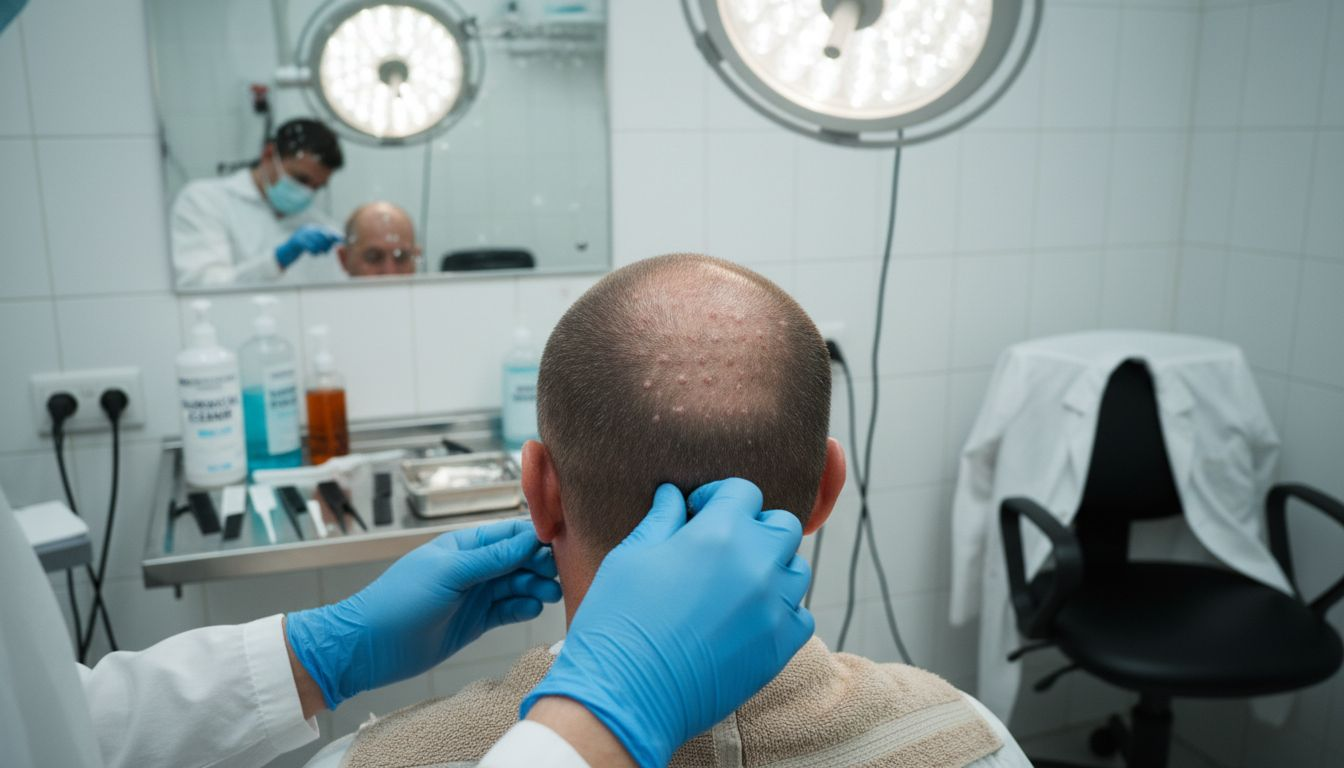
The recipient area contains the newly placed grafts. The donor area has its own wounds, which differ according to how the hair was harvested. A comfortable patch of existing hair does not tell you whether every treated area is ready for the same technique.
Ask the clinic to distinguish these areas clearly. A simple description or photograph marked by the team can be more useful than a message saying only that a haircut is permitted.
When can you book the appointment?
Follow your surgeon's instructions and ask for clarification before choosing a date. Advice depends on the procedure, healing, scalp symptoms and the type of haircut you want. A recommendation for gentle scissors does not automatically include a skin fade.
The NHS information about hair transplantation emphasises protecting newly transplanted hair during the early recovery period. It does not provide a universal barber appointment date for every patient.
If you have an event coming up, discuss it before surgery where possible. Leave room for a change of plan if healing takes longer than expected. An important diary date does not make the scalp ready sooner.
Scissors, clippers and razors are separate questions
Scissors can trim length without needing the same direct skin contact as a very close clipper or razor technique. However, the handling around the cut still matters: combing, gripping hair and resting tools against the scalp can introduce pressure.
Clippers vary in how closely they cut and how they are used. Ask specifically about the donor area, recipient area and any scars. Do not assume that adding a guard makes every technique suitable at every stage.
A razor or foil shaver is another separate decision. Get clear advice before asking for a very close finish. The barber should be willing to leave a protected area alone rather than treating an even-looking cut as more important than the recovery instructions.
FUE and FUT donor areas
FUE leaves multiple small extraction wounds, while FUT involves a donor strip and a linear wound. Neither approach should be described as scar-free. The eventual visibility of scars depends on several factors, including hair length.
Our donor-area guide explains why donor healing and appearance need consideration. If you have sutures or staples, follow the team's advice about care and removal rather than asking a barber to work around them without guidance.
For the first appointment, retaining some length may give you more styling flexibility. A very short cut can reveal redness or scars that longer hair disguises, even when the surgery is healing as expected.
What to tell your barber or hairdresser
Explain the date and type of surgery, the areas treated and the restrictions you have been given. Discuss the plan before the wash or cut begins, while it is easy to change the appointment.
Ask for gentle handling and a clear agreement about which tools will be used. Mention any tenderness or altered sensation. Do not rely on discomfort alone as a signal that too much pressure is being applied.
It is reasonable to book a modest tidy-up first. You can return for a closer or more detailed style when the clinic confirms that it is appropriate. The first visit does not have to create the final hairstyle you hope to wear.
Choosing a style during uneven growth
Existing and transplanted hair may be at different lengths during recovery. A haircut can help the overall appearance, but it cannot make all follicles follow the same growth timetable or establish the final density.
Discuss a style that works with the hair you have at that appointment. Keeping more length in one area or making a smaller change may be easier to manage than repeatedly trying to force symmetry while growth is developing.
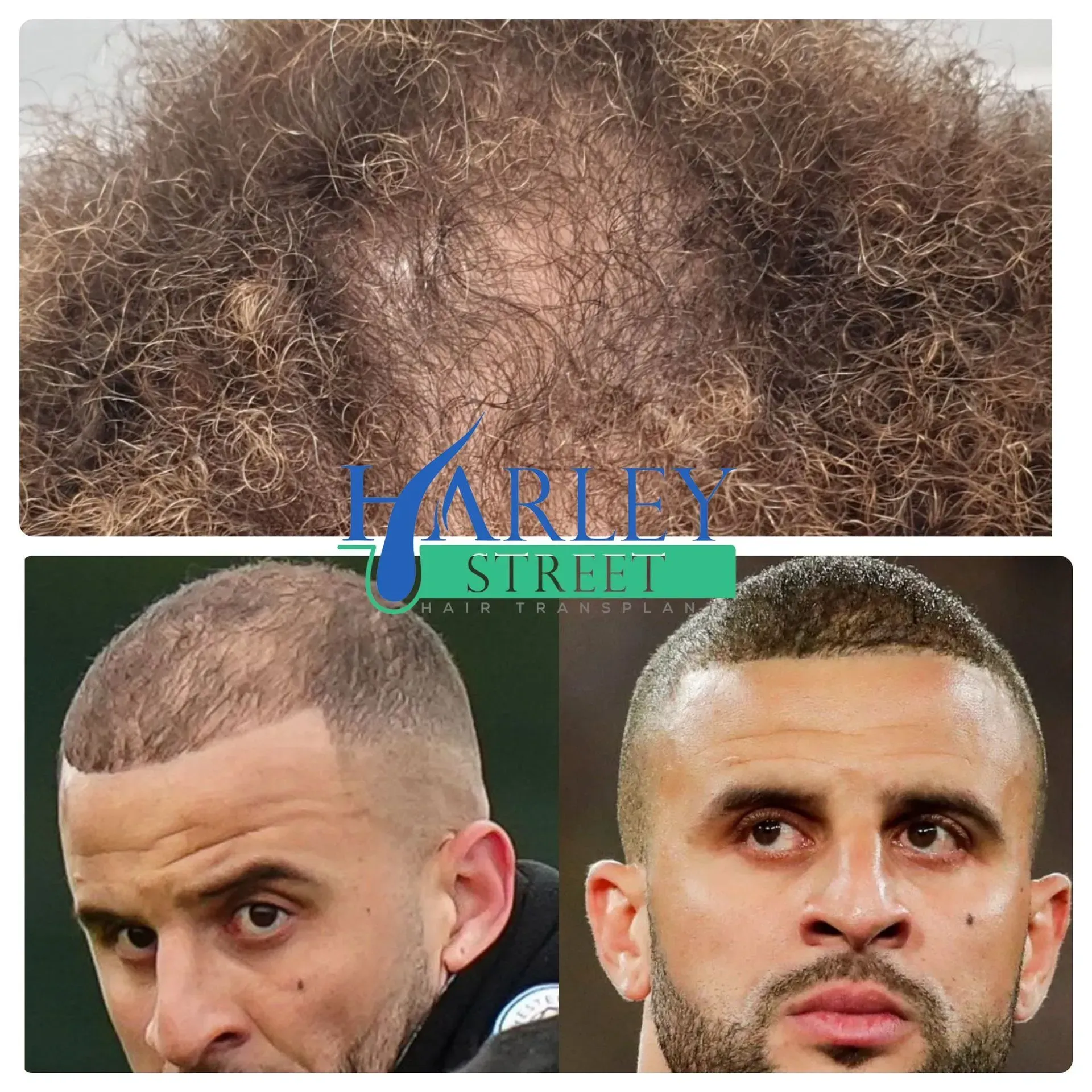
Our hair-transplant timeline explains why early appearance and the eventual result are different stages. Photographs taken before and after a haircut may look very different without reflecting a change in follicle growth.
Can you have a skin fade?
A skin fade involves close work around the scalp and may reveal the donor area more clearly. Whether it is appropriate depends on healing, the location of extraction or a linear scar, and the technique proposed.
Ask the surgeon about the exact finish you want. “Short back and sides” can mean different lengths to different people, so a reference picture may make the question clearer.
Be realistic about scar visibility. A transplant can improve coverage in the recipient area while leaving donor marks that become more noticeable with a close cut. Discussing that possibility early helps you choose a style with fewer surprises.
Washing, drying and styling at the salon
Check whether the clinic has any restrictions on the products, washing method, water pressure or drying technique. A salon's standard routine may need adjustment during recovery.
The Manchester aftercare guide provides background, while your operating team's instructions take priority. Tell the stylist before they begin if a product or technique has not yet been cleared.
Do not use tingling, heat or a vigorous massage as a test of whether the scalp has recovered. If you are uncertain about an optional treatment, leave it out and ask the clinic. A basic cut can be enough for the first visit.
Colouring, bleaching and chemical treatments
Permission to trim the hair does not automatically include dye, bleach, a perm or another chemical process. These involve different products and contact with the scalp, so ask separately.
If you have previously reacted to hair dye, tell both the clinic and the colourist. Follow the product's testing instructions and professional advice; do not assume that a formula you used years ago will necessarily suit a recently treated scalp.
Consider separating the first haircut from a colour appointment. That gives you a simpler plan and makes it easier to identify what caused any discomfort. There is no need to combine every appearance change into one session.
Reasons to postpone the cut and contact the clinic
Do not ask a barber to cut through or remove persistent crusts, an open area or a sore patch. Contact the surgical team if you are unsure whether healing is progressing normally.
Increasing pain, spreading redness, discharge or unexpected bleeding needs advice. A haircut should not be used to tidy away evidence of a problem before it has been assessed.
If something happens during the appointment, stop and explain exactly what occurred when contacting the clinic. State which area was affected, what tool was used and whether there was bleeding or pain. A clear account helps the team advise you.
Questions to settle before you book
Ask whether you can cut the donor and recipient areas, whether scissors or clippers are permitted, what length should remain and which products to avoid. Confirm what to do if the scalp is still tender on the day.
Keep those answers with your aftercare instructions. If the barber proposes a different technique, check it before proceeding rather than interpreting a general clearance as permission for every option.
You can contact the Manchester team about treatment planning and recovery questions. If another clinic performed your surgery, its team should advise on your individual healing and restrictions.
Questions and answers
Must everyone wait six months for a haircut?
No single six-month rule fits every type of haircut and every recovery. Ask the operating team about the specific area and technique. Cutting existing length and shaving close over treated skin are not equivalent decisions.
Will a haircut make transplanted hair grow faster?
Cutting the visible shaft does not accelerate the follicle's growth cycle. It may make the hairstyle look neater or more even. Keep that cosmetic change separate from the gradual development of the transplant.
Can a barber tell whether the grafts are ready?
A barber can discuss technique and appearance, but the surgical team should advise about postoperative readiness. Share the instructions rather than expecting the barber to assess wounds or make a clinical judgement.
What if I have already had a haircut?
If there was no problem, follow the rest of your recovery plan. Contact the clinic if there was trauma, bleeding, new pain or another concern. Describe what happened instead of assuming that either everything is ruined or nothing needs checking.
Can I cut my hair at home?
The same restrictions apply at home, with the added difficulty of seeing the donor area and controlling tools around it. Ask what is permitted before starting, and avoid attempting a close cut simply because a salon appointment is inconvenient.
Should I change style to hide every early thin patch?
You can choose whatever feels comfortable, but repeated close cuts or elaborate styling may make comparisons harder. A manageable temporary style and consistent photographs can help you follow progress without treating each uneven stage as the final result.