Male Pattern Baldness: Causes, Stages & Treatment Options


Contents
- What is male pattern baldness?
- What causes male pattern baldness?
- Who is likely to experience male pattern baldness?
- How is male pattern baldness diagnosed?
- Stages of male pattern baldness
- Is androgenetic alopecia permanent?
- Is male pattern baldness inherited?
- Is there a way to prevent male pattern baldness?
- What are ways to treat male pattern baldness?
- What can I do if I’m worried about hair loss?
- Male pattern baldness FAQs
- Sources
Male pattern baldness (MPB), or androgenetic alopecia, is the most common type of hair loss in men [1]. It affects more than 95% of men by the age of 80 and typically starts before middle age [2].
If you find that your hairline is receding, you have a bald spot on your crown, or your hair is thinning on one side, you may be experiencing male pattern baldness.
In this article, you’ll discover what causes male pattern hair loss, whether you can prevent it, and learn which male hair loss treatments are most effective.
What is male pattern baldness?
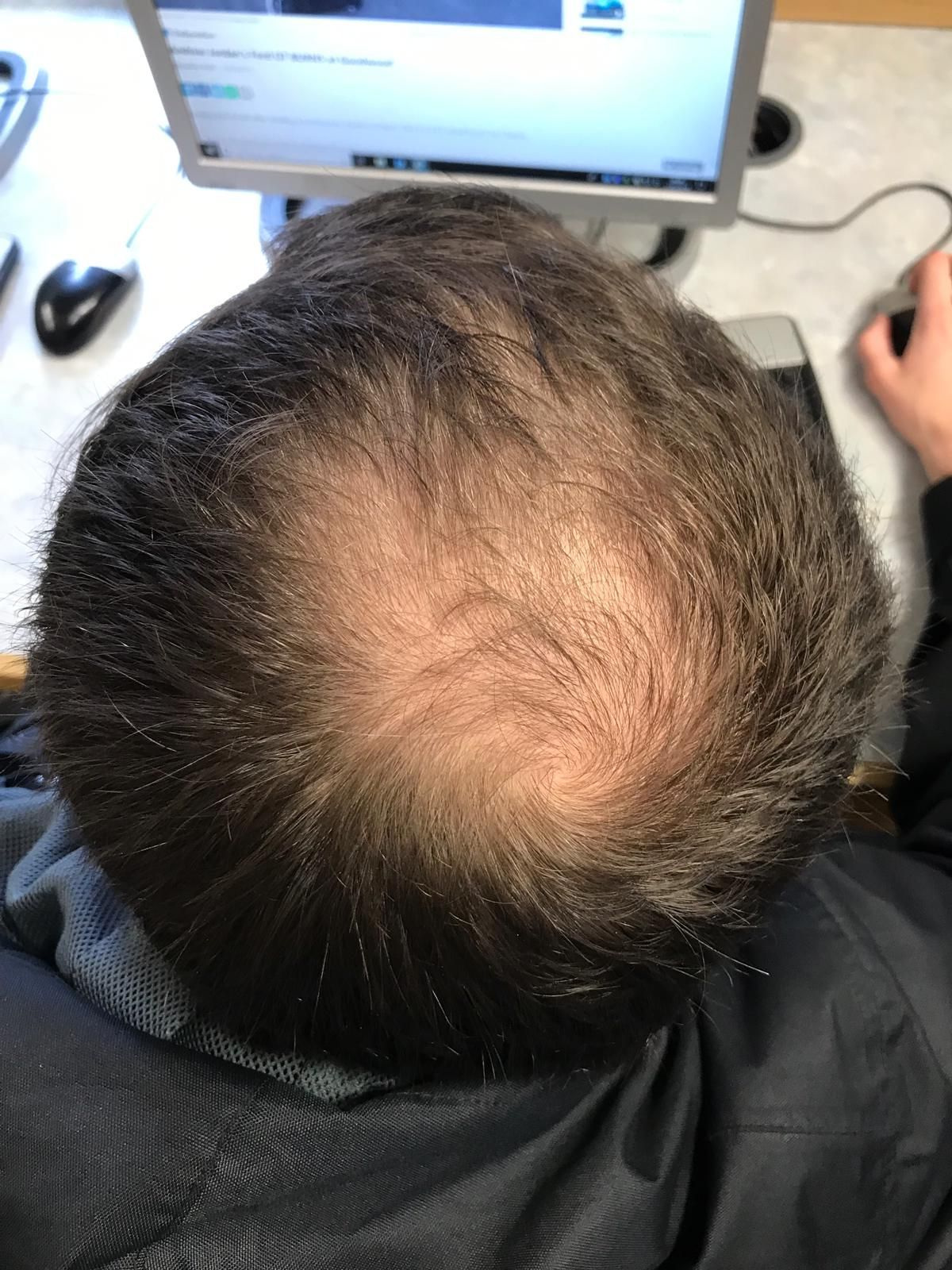
Male pattern baldness is a type of hair loss that exclusively affects men and people assigned male at birth. It’s characterised by hair loss that starts at the temples and progresses across the crown and mid-scalp:
Unlike female pattern hair loss, which tends to spread evenly across the scalp, male pattern baldness affects only the follicles at the front and top of the scalp, leaving the hair around the sides and back of the head intact.
What causes male pattern baldness?
Many factors contribute to the development of male pattern baldness, including:
- Hormones
- Genetics
- Age
Dihydrotestosterone, or DHT, is a male sex hormone that binds to androgen receptors in your hair follicles. This causes the follicles to shrink and when the hair follicle shrinks, it stops producing hair.
All men produce DHT, but they’re not all affected by male pattern baldness. Genetics influence how sensitive your follicles are to DHT. Pattern hair loss can occur with normal hormone levels; it does not by itself show that you produce too much DHT.
As you get older, your DHT levels start to decrease, but hair loss tends to get worse [3]. That’s because male pattern baldness is a progressive condition that will cause more hair loss if left untreated. But if you seek treatment early, you can slow, stop, and even reverse this type of hair loss. Find out more about when male pattern baldness starts.
There are also environmental reasons why your hair is falling out. Things that negatively affect health can also contribute to balding. These include:
- Stress and anxiety-related hair loss
- Vitamin deficiencies that lead to hair loss
- Smoking, which can double the likelihood of experiencing hair loss
Hair loss has also been linked to several long-lasting conditions, including diabetes and high blood pressure. Learn more about diabetes and hair loss.
If hair loss occurs alongside another health complaint or after new medication, you should seek medical advice. Hair loss may occur due to other conditions, so your doctor should verify and diagnose what type of balding you have.
Who is likely to experience male pattern baldness?
Any adult man can experience male pattern baldness, but some traits can put you at greater risk.
Caucasian men seem to be more inclined to suffer from MPB than men of other races. According to one UK study [4]:
- White men were most at risk for male pattern balding
- Men of South Asian descent were more likely to see crown balding than white men, but less likely to see a receding hairline
- Black men were less likely to experience frontal, crown, or severe hair loss
- Men of Chinese descent were also less likely to go bald than white men, but more likely than Black men
Male pattern baldness is hereditary. Most of the genetic variants that impact hair growth are found on autosomal chromosomes (all chromosomes except X and Y). However, some strong variants are linked to the X chromosome inherited from the mother, which suggests a stronger inheritance from the male relatives on the maternal side. Still, you may be more likely to lose hair if there are bald men on either side of your family.
Some evidence also suggests male pattern baldness can be aggravated by Covid, though hair loss after Covid is more commonly due to telogen effluvium [5].
How is male pattern baldness diagnosed?
Your trichologist will ask you a series of questions to rule out any causes of temporary hair loss, such as eating disorders, autoimmune conditions, recent chemotherapy treatment, or mental health issues. They will also examine your hair and scalp for the typical signs of male pattern baldness. This usually consists of thinning hair around the temples and/or crown. Eventually, the hair may become so thin you can see your scalp.
Trichologists use a chart called the Norwood scale(sometimes known as the Hamilton-Norwood scale) to diagnose male pattern baldness. This chart indicates the various degrees of hair loss that usually occur in mild, moderate, and severe male pattern baldness.
Stages of male pattern baldness
There are seven different stages of MPB [2]. The Norwood scale helps to gauge the severity of your balding:
- Norwood stage 1: Very little hair thinning around the temples; no crown hair loss
- Norwood stage 2: Slight thinning around the temples; no crown hair loss
- Norwood stage 3: Visible hairline recession (may be M, U or V shape); no crown hair loss
- Norwood stage 3 vertex: Hairline recession with visible hair loss on the crown
- Norwood stage 4: Crown and temple hair loss spreads, though there’s still good hair density across the mid-scalp
- Norwood stage 5: Extensive crown and temple hair loss
- Norwood stage 6: Widespread hair loss, with crown and temple hair loss meeting. Some hair remains at the edges of the crown
- Norwood stage 7: All hair is gone from the temples, crown, and mid-scalp
Most men don’t notice any hair loss until they’re at stages 2-3. If you have a genetic predisposition to male baldness, you may be more aware and notice it at stage 1.
In rare cases, hair loss may progress beyond Norwood stage 7. Retrograde alopecia is a type of aggressive pattern baldness that affects hair at the nape and around the ears and can impact the safe donor area for a hair transplant.
Is androgenetic alopecia permanent?
Unfortunately, male pattern baldness is permanent and irreversible. But there are some treatments that can slow or stop pattern baldness and restore density if used early enough.
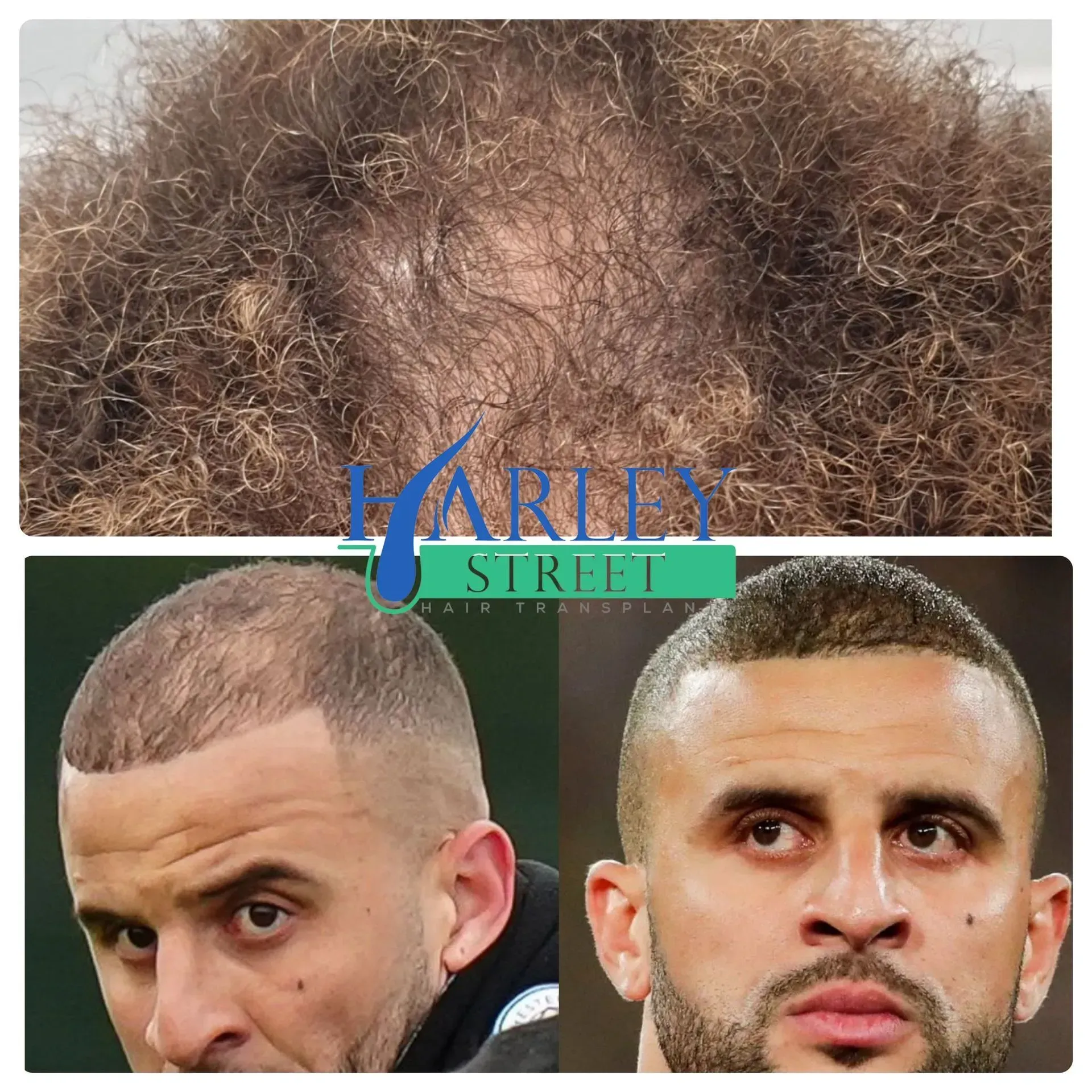
Hair transplants are popular because they can replace hair that’s been permanently lost. By taking healthy hair follicles from the back of the head and implanting them in the areas affected by hair loss, you can get natural, permanent hair regrowth across your full hairline.
Is male pattern baldness inherited?
Research suggests that although DHT is the catalyst for male pattern baldness, genetics play a large part, too [6]. 80% of people with male pattern baldness have a family history of androgenetic alopecia [7].
Male pattern baldness has been strongly linked to the AR gene, or the androgen receptor gene, which controls the impact of testosterone and other androgens (male sex hormones) in the body. People with a highly active AR gene are more likely to experience androgenetic alopecia [8].
Is there a way to prevent male pattern baldness?
Because male pattern baldness is highly dependent on your genes and hormones, there’s no real way to prevent it if you’re susceptible to it. But there are things you can do to keep your existing hair healthy and reduce hair loss. These include:
- Taking DHT blockers like Finasteride and Dutasteride
- Eating a balanced diet
- Avoiding and managing stress
- Limiting the use of heat styling practices
- Quitting smoking
- Avoiding tight hairstyles like dreadlocks and man buns
What are ways to treat male pattern baldness?
There are several treatments available for this type of hair loss. Some sufferers may choose not to pursue male pattern baldness treatment. However, there are a number of medicinal and surgical options to stop a receding hairline and decrease crown hair loss.
In scientifically controlled trials, many approved medications have been shown to halt hair loss progress. Sometimes they may even reverse it, depending on the stage of hair loss you are at.
Minoxidil
Minoxidil, sometimes known as Rogaine, is a solution applied directly to the scalp to stimulate hair growth. It stimulates the hair follicles and can slow hair loss for many men who use it. Some users may even see new hair growth but are unlikely to see complete regrowth. However, hair loss can return when you stop using this treatment.
Finasteride
Finasteride, sometimes known as Propecia, is an oral tablet that blocks DHT production. However, it only works as long as you take the drug, so hair loss will return if treatment is stopped.
Finasteride tends to work better than Minoxidil, which has been shown to slow down further hair loss substantially [9]. More than 90% of Finasteride users have seen positive Finasteride results [10].
Finasteride is a prescription medicine and should be taken as directed by your prescriber. Discuss possible sexual and psychiatric side effects before starting. Sexual problems have sometimes persisted after treatment was stopped. MHRA advice is to stop finasteride 1 mg used for hair loss and contact a doctor as soon as possible if depression or suicidal thoughts develop.
Dutasteride
Dutasteride is an oral medication similar to Finasteride. Dutasteride is taken daily with a dosage of 0.5 milligrams. It inhibits enzymes that convert testosterone into DHT, a leading cause of male pattern baldness. However, Dutasteride is a more potent drug due to it inhibiting additional DHT-generating enzymes. [11]
At the time of writing, the drug is not officially licensed for the treatment of hair loss in the UK and the US. Instead, it is used to treat the enlargement of the prostate gland.
Learn more about another drug used to treat an enlarged prostate, Tamsulosin, and if it can enhance Dutasteride’s effectiveness against hair loss.
Hair transplants
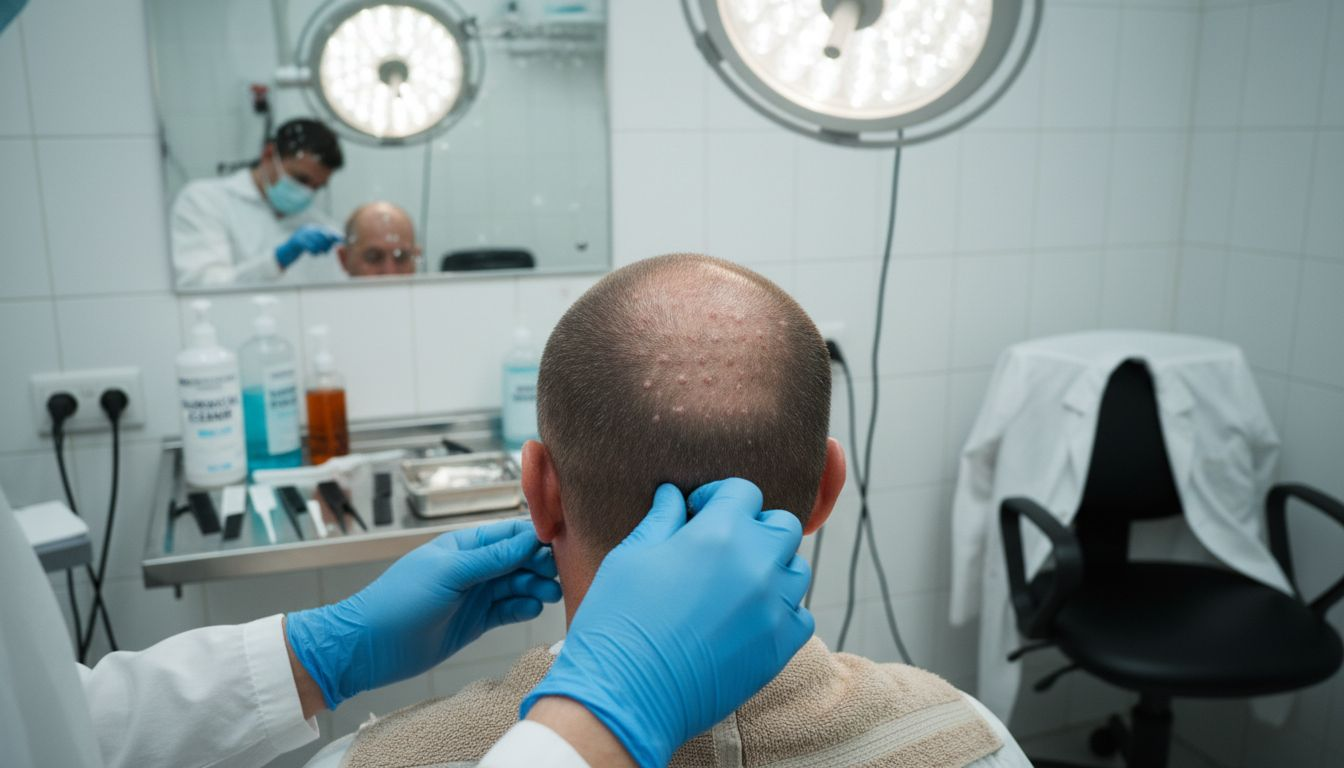
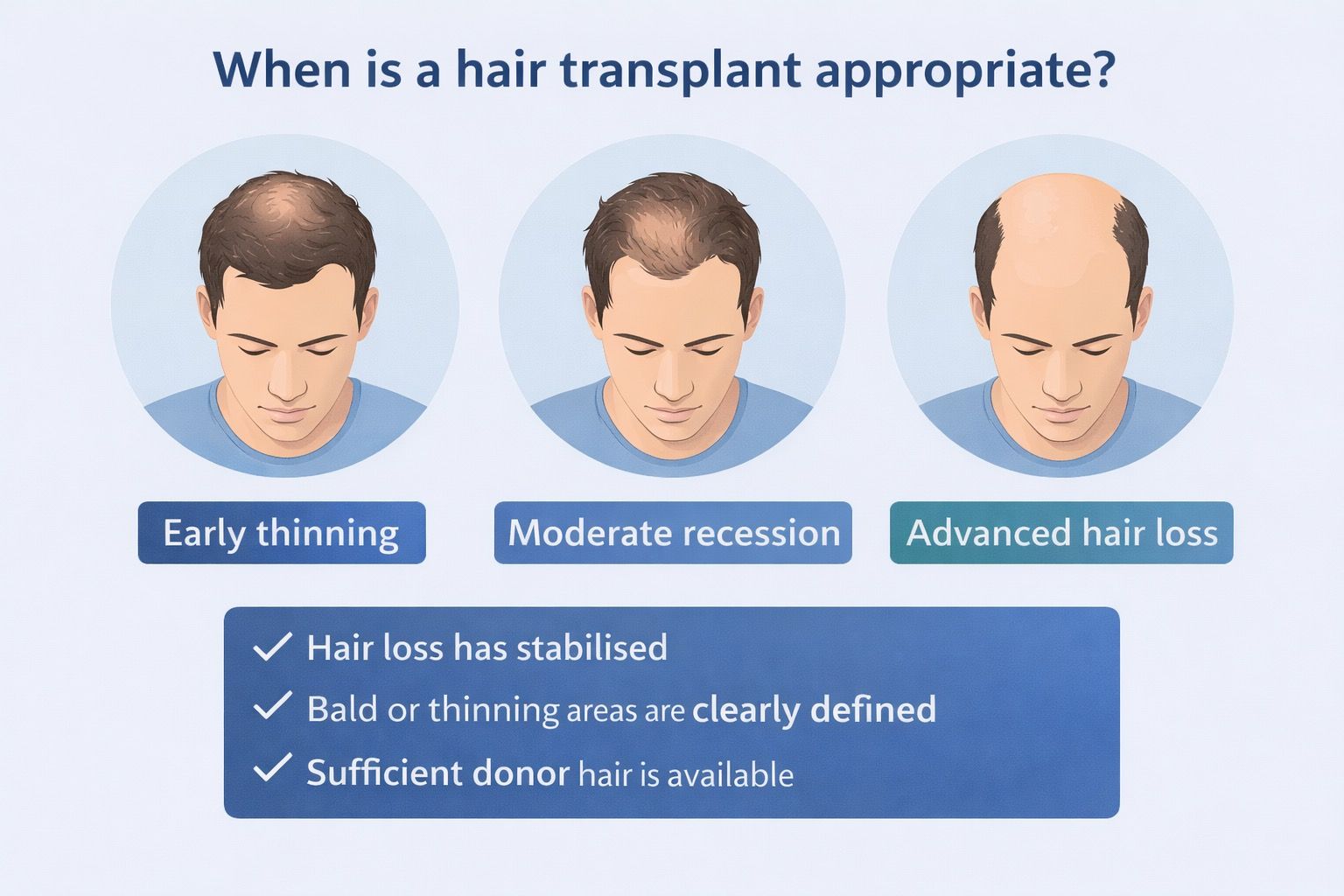
Hair transplants are another option for suitable patients. They involve surgery, recovery and a risk of scarring or other complications. Transplanted hair can be long-lasting, but surgery does not stop untreated native hair from continuing to thin.
There are two popular types of hair transplants: FUE (Follicular Unit Extraction) and FUT(Follicular Unit Transplantation). They have many similarities, but there are also some differences. Both have excellent success rates and create great results.
Our fixed price is £3,499 for 2,500 grafts or £3,999 for 3,000 grafts. Both include a complimentary PRP treatment and 18 months’ free aftercare. The appropriate graft number and suitability for surgery are assessed at consultation. See our hair transplant cost page for details.
Sometimes patients have more than one transplant. The ISHRS 2022 practice census reported that 33.1% of surveyed patients had two procedures and 9.6% had three or more [12]. These figures do not predict how many operations an individual will need.
Some patients also choose to have scalp micropigmentation (SMP) following their hair transplant to create a more even hairline while their hair is cropped short.
What can I do if I’m worried about hair loss?
Male pattern baldness affects men the world over, and there is no known cure. Hair transplants are one option for suitable patients who want to restore areas of permanent hair loss.
Some products like hair thickening sprays and hair thickening shampoos can also mask the effects. But while there is no solution, some medications can slow hair loss down.
If you’re suffering from male pattern baldness, get in touch with Manchester Hair Transplant Clinics. We offer free consultations and can answer any questions you may have. We can also discuss the options available to you – from hair transplants to alternative treatments. Book a consultation to get started.
Male pattern baldness FAQs
Here are some of the most frequently asked questions about male pattern baldness.
Does weightlifting lead to hair loss?
No, weightlifting doesn’t usually lead to hair loss. Research suggests there’s no link between high-intensity exercise and androgenetic alopecia [13].
However, some practices associated with weightlifting may have an impact on your hair. Certain anabolic steroids have been linked with hair loss. In addition, research into creatine and hair loss suggests creatine may heighten DHT levels (though this isn’t necessarily likely to lead to hair loss) [14]. Whey protein and hair loss studies suggest these supplements may accelerate hair loss in those already experiencing MPB [15].
Are any hair loss treatments available on the NHS?
Because male pattern baldness is seen as a cosmetic condition, there are no hair loss treatments available on the NHS. You’ll need to visit a private hair loss clinic to access treatment.
Am I going bald because I wear a hat all the time?
It’s unlikely that wearing a hat is causing your hair loss unless your hat constantly pulls on your hair roots and damages them. This is known as traction alopecia, and may make your male pattern baldness appear more advanced.
How much hair loss is normal for the average day?
It’s normal to lose up to 100 hairs a day. Hair shedding is a natural part of the hair growth cycle. But if you start to see large clumps of hair falling out in the shower, or lots of hair on your pillow in the morning, you may be losing more hair than normal.
Sources
- Healthline: Male Pattern Baldness: Causes, Identification, and Prevention
- Male pattern baldness: current treatments, future prospects
- Age-dependent change of serum 5alpha-dihydrotestosterone and its relation to testosterone in man
- A cross-sectional study of male balding patterns in people of colour
- COVID-19 Can Exacerbate Pattern Hair Loss and Trigger Telogen Effluvium
- Genetic prediction of male pattern baldness
- Male Androgenetic Alopecia
- Genetic Variation in the Human Androgen Receptor Gene Is the Major Determinant of Common Early-Onset Androgenetic Alopecia
- What is Male-Pattern Hair Loss, and Can It be Treated?
- Long-term (10-year) efficacy of finasteride in 523 Japanese men with androgenetic alopecia
- Dutasteride is a selective inhibitor of type 1 and type 2 isoforms of steroid (5AR)
- ISHRS Practice Census 2022
- The Association between Exercise and Androgenetic Alopecia: A Survey-Based Study
- Three weeks of creatine monohydrate supplementation affects dihydrotestosterone to testosterone ratio in college-aged rugby players
- Bovine whey proteins – Overview on their main biological properties